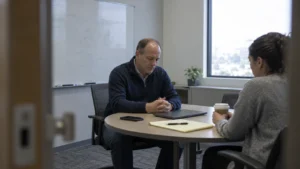
Why Managers Avoid Hard Conversations
Why do managers avoid hard conversations? The brain science behind avoidance, what it costs your teams, and what a coaching keynote should change for leaders.

What a Leadership Trust Keynote Should Cover
What should a leadership trust keynote cover? Use this checklist to evaluate trust keynote speakers for your leadership summit, offsite, or all-hands.

How to Choose a Transformation Kickoff Keynote
How to choose a keynote speaker for a transformation kickoff: what the session must do, where it fits on the agenda, and questions to ask before you book.

How to Choose a Psychological Safety Keynote
How to choose a psychological safety keynote speaker: seven steps, the questions to ask, and what the session should change for your leaders and culture.

Coaching Keynote vs. Coaching Workshop
Coaching keynote vs. coaching workshop: compare length, outcomes, and best-fit events to decide which format your leadership team needs, or when to book both.
22 Leadership Development Statistics for 2026, and What They Say About What Actually Works
22 verified leadership development statistics for 2026 from Gartner, Gallup, DDI and more, plus what the research says makes leadership training transfer.
How to Choose a Leadership Keynote That Changes Behavior After the Event
The real test of a leadership keynote is what your people do differently the following Monday. Here is how to choose a session built to change behavior, not just fill a stage.
What Is the Neuroscience of Trust? Why People Follow Leaders They Trust
Trust is a measurable state in the brain, not a soft skill. Here is what the neuroscience shows about how leaders build trust on purpose, build it faster, and make it last.