
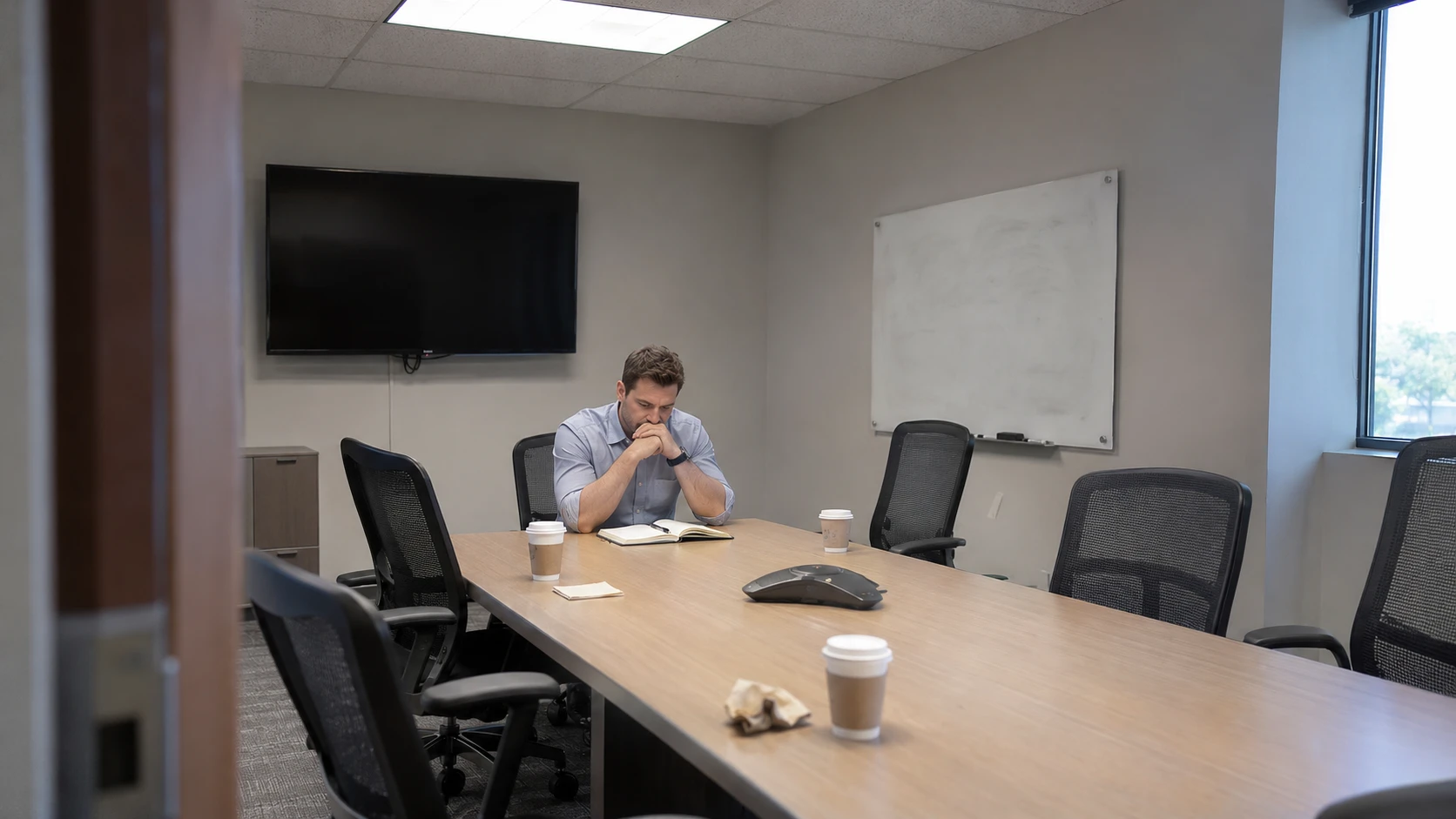
Culture problems rarely announce themselves. They show up as quiet meetings, ideas that never surface, and good people who stop raising their hands. By the time an engagement score moves, the climate underneath it has been shifting for a while.
I’ve spent my career studying what happens inside the relationship between a leader and the people they lead, across 25+ years leading teams in the life sciences and the four original research studies behind my PhD at Case Western Reserve University. When culture leaders ask me whether their organization needs a session on coaching climate, I usually ask them what they’re noticing first. The signs tend to be the same.
What a Coaching Climate Is
Coaching climate is the set of everyday conditions that make coaching normal: people feel safe to speak up, leaders ask more than they tell, and development happens in ordinary conversations, not only in formal programs. It’s the difference between a culture that has coaching in it and a culture that runs on it.
In my keynote, I describe four interconnected elements. Emotional intelligence is the bedrock. Psychological safety is the soil. Questioning and active listening are what make growth happen in conversation. Adaptive leadership style ties it together through empathy, adaptability, and empowerment.
Psychological safety is a shared belief that a team is safe for interpersonal risk taking, as defined by Amy Edmondson in Administrative Science Quarterly (1999). Without it, the other three elements rarely take root.
8 Signs Your Culture Needs a Coaching Climate
Here’s a quick view of the signs I hear about most, followed by what each one usually means.
| Sign | What you’ll notice | What’s usually underneath |
|---|---|---|
| Meetings are quiet, hallways are loud | Real opinions surface after the meeting | People don’t feel safe disagreeing in the room |
| Bad news travels slowly | Problems reach leaders late | Raising issues feels risky |
| Managers solve every problem | Teams wait for answers | Leaders tell more than they coach |
| Feedback only happens at review time | Surprises in performance conversations | Feedback isn’t part of everyday work |
| Development fades after programs end | New skills don’t show up back at work | The conditions don’t support practice |
| Ideas come from the same few people | Most of the team stays silent | Speaking up isn’t rewarded or safe |
| Strong performers leave unexpectedly | Exits that “came out of nowhere” | People don’t feel seen or developed |
| People wait to be told | Little initiative without direction | Ownership hasn’t been invited |
Meetings are quiet, but hallways are loud
When the real conversation happens after the meeting, people have learned that disagreement in the room carries a cost. That’s a psychological safety signal, and it’s one of the most common I hear.
Bad news travels slowly
If leaders find out about problems late, it’s rarely because nobody knew. It’s because raising the issue felt riskier than staying quiet. In a coaching climate, early bad news is treated as useful, not as a failure.
Managers solve every problem themselves
When managers default to giving answers, teams learn to wait for them. It feels efficient. Over time, it makes the manager the bottleneck and keeps people from building judgment of their own.
Feedback only happens at review time
If performance conversations bring surprises, feedback isn’t part of everyday work. A coaching climate makes small, frequent conversations the norm, so the formal review confirms what people already know.
Development fades after the program ends
This is one of the most important signs, and it’s rarely the program’s fault. When people return to a climate where nobody asks about what they learned, where there’s no time to practice, and where their manager works differently, new skills fade. The climate is what lets development stick.
New ideas come from the same few people
Every team has a few confident voices. When they’re the only ones you hear, the rest of the team has decided it isn’t worth the risk. A coaching climate widens the circle.
Strong performers leave without warning
When a valued person leaves and it “came out of nowhere,” it usually didn’t. The signals were there, but the conversations that would have surfaced them weren’t happening.
People wait to be told
Low initiative is often read as low motivation. More often, it’s a sign that ownership has never been invited. People step up when leaders ask what they think and then act on it.
Why These Signs Show Up: The Brain Behind Culture
Every one of these signs traces back to the same mechanism. The brain is constantly scanning for threat, and social threat counts. When speaking up, admitting a mistake, or disagreeing with a leader feels risky, people protect themselves. They stay quiet, wait, and do what’s safe.
The answer isn’t asking people to be braver. It’s changing the conditions so speaking up stops feeling dangerous. That’s why I frame culture as something designed, not stumbled into. Leaders shape the climate in every conversation, whether they mean to or not.
What a Coaching Climate Keynote Should Do
My keynote Coaching Climate®: Building a Sustainable Culture is built for organizations that recognize these signs and want leaders to understand their role in changing them. Your audience walks away with:
- The drivers of a coaching culture. The interconnected elements that create a transformative climate.
- Psychological safety. Where people feel secure to share ideas, take risks, and innovate.
- Questioning and active listening. The art that ignites curiosity and drives development.
- Adaptive leadership style. Empathy, adaptability, and empowerment that help people thrive.
“Dan’s passion, knowledge, and gift of connecting principles into action gave us a giant leap forward, as a group and as individual leaders.”
TJ Casey, SVP & Chief of Staff, Technology
A coaching climate session also complements whatever development your organization already runs. It doesn’t replace it.
A keynote is one of those approaches. Its job is to give every leader the same picture of the climate you’re building and their part in it.
When to Bring in a Coaching Climate Keynote
A few moments make this session especially useful:
- When you launch a culture initiative, so leaders understand the why before they’re asked to change the how.
- After engagement survey results land, when leaders are ready to talk about what the numbers mean.
- At a leadership summit, where leaders from across the organization can build a shared language.
- At the start of a manager development program, so participants return to a climate that supports what they learn.
Every topic I teach works in several formats. A 45 to 90 minute keynote gives the whole room the frame. A 3 to 4 hour half-day workshop adds practice. A multi-day program of two days or more embeds the shift over time, and a virtual session works for distributed teams. For a related angle, see my guide to choosing a psychological safety keynote.
If you’re seeing some of these signs and want to talk through whether a coaching climate session fits your audience and your outcome, I’d love to hear about it. Tell me about your event, or explore all of my keynote topics.
Frequently Asked Questions
What are the signs a culture needs a coaching climate?
Common signs include quiet meetings followed by loud hallway conversations, bad news that reaches leaders late, managers who solve every problem themselves, feedback that only happens at review time, and development that fades after programs end. Each points to conditions that make speaking up or growing feel risky.
What is a coaching climate?
A coaching climate is the set of everyday conditions that make coaching normal. People feel safe to speak up, leaders ask more than they tell, and development happens in ordinary conversations, not only in formal programs.
How is a coaching climate different from psychological safety?
Psychological safety is one element of a coaching climate, often described as the soil it grows in. A coaching climate also includes emotional intelligence, questioning and active listening, and an adaptive leadership style.
When should we book a coaching climate keynote?
It works well at the launch of a culture initiative, after engagement survey results, at a leadership summit, or at the start of a manager development program. In each case, it gives leaders a shared picture of the climate they’re building.
Can a keynote change an organization’s culture?
A keynote can help leaders see how they shape the climate and give them a shared language, which is an important first step. Culture changes through what leaders do every day afterward, so the keynote works best alongside development and reinforcement.
Who should attend a coaching climate keynote?
Leadership teams, people managers, HR and culture leaders, and L&D leaders all benefit. Because every leader shapes the climate in their own team, the session has the most impact when leaders at several levels hear it together.