
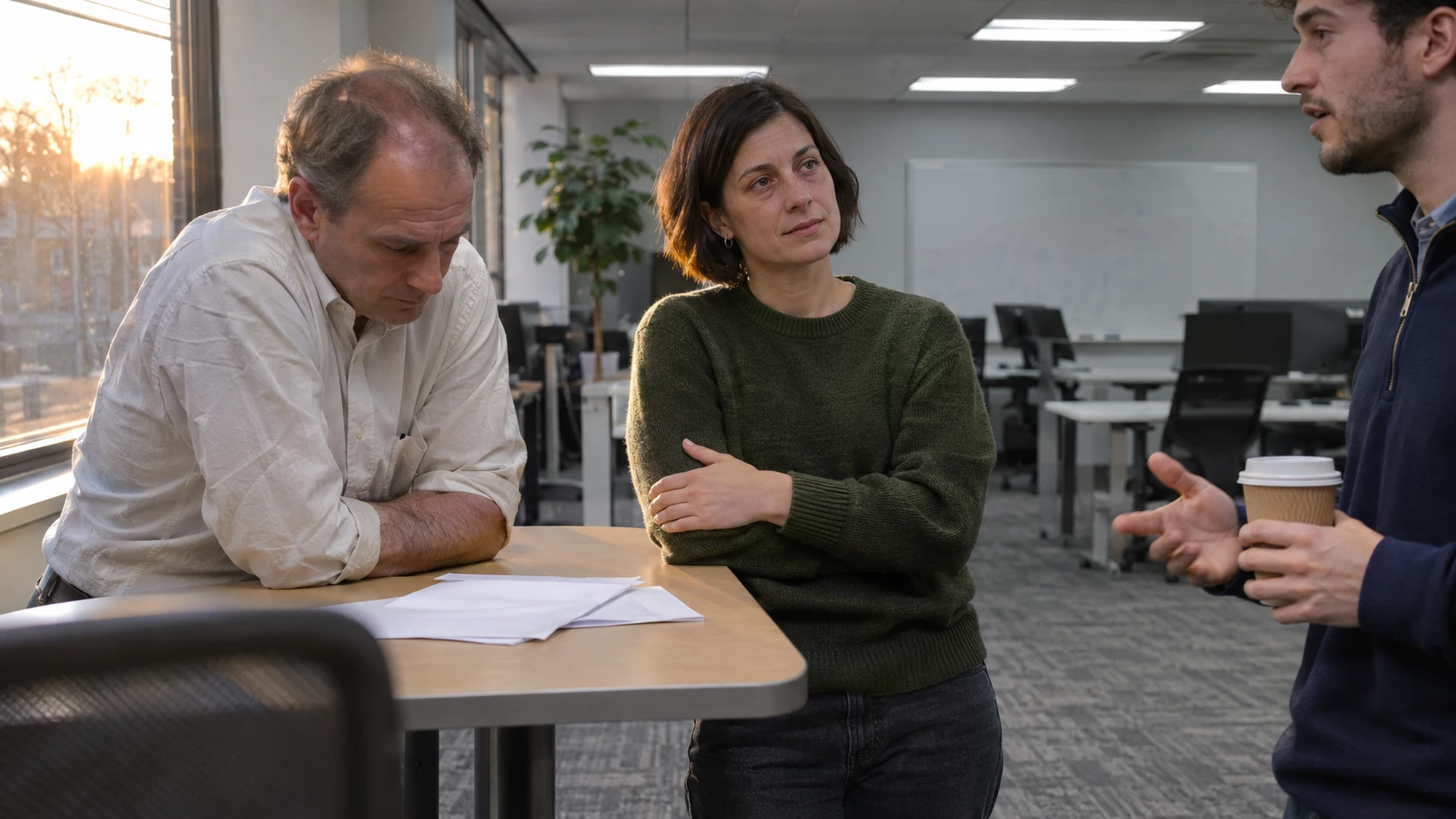
Your people aren’t resisting this change. They’re tired of all of them. When change arrives faster than people can absorb it, even good initiatives start to land as one more thing, and the energy you need for the next one quietly drains away. The wrong keynote adds to that weight. The right one helps leaders lift it.
I’ve spent my career studying what happens inside the relationship between a leader and the people they lead, from 25+ years leading teams in the life sciences through more reorganizations than I can count, to teaching change management at Miami University’s Farmer School of Business. Change fatigue is one of the most common reasons planners reach out to me, and one of the easiest to get wrong when choosing a session.
What Change Fatigue Is, and What It Isn’t
Change fatigue is the exhaustion and disengagement people feel when change keeps arriving before the last change has settled. It shows up as skepticism, low energy, and a “this too shall pass” attitude toward new initiatives.
It isn’t the same as resistance to a single change. Resistance is about a specific decision. Fatigue is about the cumulative load.
In the same research, Gartner found the average employee experienced 10 planned enterprise changes in 2022, such as restructures and culture transformations. That’s the backdrop most leadership audiences are sitting in today.
Why the Brain Gets Tired of Change
We live in a world wired for the status quo. The brain is built to avoid risk and prefer the familiar, because the familiar is predictable and predictable is safe. Each change asks the brain to rebuild its predictions. Stack enough changes together and the brain stays on alert.
Uncertainty is also experienced as threat. Even mild, uncontrollable stress impairs the prefrontal cortex and shifts control toward habitual reactions, according to Amy Arnsten’s research in Nature Reviews Neuroscience (2009). That’s why fatigued teams default to old habits, even when they agree with the new direction.
That number explains why change fatigue is a leadership issue, not just a communications issue. When trust in change is low, people need more from their leaders, not more announcements.
How to Choose the Right Keynote for Change Fatigue
Here’s how I’d approach the decision, step by step.
1. Name the fatigue, not the next change
If your keynote is framed around launching the next initiative, a fatigued audience will hear it as one more ask. Look for a session that speaks directly to the experience of constant change and validates it before asking anything of anyone.
2. Look for science that normalizes resistance
A strong change keynote explains why resistance is biological, not a character flaw. When leaders understand that the brain defends the status quo by design, they stop taking pushback personally and start leading it differently.
3. Keep the focus on what leaders do
Change fatigue is felt in everyday conversations between leaders and their teams. The session should change how leaders talk about change, listen to concern, and make uncertainty feel manageable, not just explain the theory.
4. Make sure it lowers pressure
A fatigued audience doesn’t need more energy pumped into the room. It needs perspective, clarity, and a few practical shifts. The best sessions leave people feeling steadier, not more stretched. One simple test: ask the speaker how they want people to feel walking out of the room. If the answer is “fired up,” that may not be what a tired audience needs right now.
5. Connect change to trust
When trust is low, change feels riskier. A session that connects how leaders build trust with how they lead change gives your leaders something they can use in every conversation, not just the next rollout.
6. Match the format to the energy in the room
A 45 to 90 minute keynote is usually the right fit for a fatigued audience, because it gives everyone a shared language without adding a heavy time commitment. If leaders need room to practice the conversations, add a 3 to 4 hour half-day workshop for managers.
Comparing Keynote Approaches for a Fatigued Audience
Different change keynotes are built for different moments. Here’s how they tend to land when people are already tired.
| Keynote approach | What it’s built to do | How a fatigued audience may hear it | Best moment for it |
|---|---|---|---|
| Rally-the-room energy | Build excitement for a new direction | As one more push | A genuine fresh start after a quiet period |
| Change process and frameworks | Explain the stages and mechanics of change | Useful, but abstract | Change teams planning a rollout |
| Future-focused vision | Paint a picture of what’s coming | Exciting, but distant | Strategy launches |
| Science of change resistance | Explain why change is hard and how leaders help people through it | As understanding and relief | Mid-transformation, or after several changes have stacked up |
If your people are already tired, the last row usually serves them best.
What a Change Fatigue Keynote Should Cover
My keynote Leading Change Under Pressure was built for leaders in a world wired for the status quo. Your audience walks away with:
- How we resist change. The science of change resistance, made visible and practical.
- Why we resist change. The biological reasons the brain defends the status quo.
- How to overcome the barriers. Tools to move yourself and your team past the resistance.
- A path to drive growth. Turn change from a threat into a source of momentum, at work and at home.
Leaders also hear how authentic stories about the change, told by the leader, move people further than another slide. And because change fatigue weighs on leaders too, we spend time on how leaders manage their own stress so they can steady their teams.
“Dan was instrumental in helping our leadership team drive the changes we needed to make.”
Matt Garretson, Founder, Burnbright
When to Put It on Your Agenda
Timing changes how a change fatigue session lands. A few moments that work well:
- Mid-transformation. After the launch energy fades and before the next wave arrives.
- Annual leadership meeting. When leaders can look back at a year of change and reset how they lead the next one.
- After a reorg settles. When people are ready to reflect but still need help rebuilding confidence.
- Before a major new initiative. Only if the session addresses fatigue head-on rather than selling the initiative.
If you’re opening a brand-new transformation instead, my guide on how to choose a transformation kickoff keynote covers that moment.
If you’re planning a leadership meeting during a season of constant change and want to talk through whether this fits your audience and your outcome, I’d love to hear about it. Tell me about your event, or explore all of my keynote topics.
Frequently Asked Questions
What is the best keynote for change fatigue?
The best keynote for change fatigue validates how tiring constant change is, explains why the brain resists it, and gives leaders practical ways to steady their teams. Look for a session grounded in the science of change resistance that focuses on what leaders do in everyday conversations, rather than one that pushes the next initiative.
What is change fatigue?
Change fatigue is the exhaustion and disengagement people feel when change keeps arriving before the last one has settled. It’s different from resistance to a single change, because it comes from the cumulative load. It often shows up as skepticism, low energy, and reluctance to support new initiatives.
Why do employees get tired of change?
The brain is wired to prefer the familiar because it’s predictable. Each change forces it to rebuild its predictions, and uncertainty is experienced as threat. When changes stack up, people stay on alert, which drains energy and pushes them toward old habits.
Can a keynote help with change fatigue?
Yes, when it’s the right kind of session. A keynote can give leaders a shared understanding of why change is hard, normalize resistance, and offer practical shifts for leading their teams through it. It works best when the organization also gives people room to absorb change and reinforces the message afterward.
When should we schedule a change fatigue keynote?
Mid-transformation, at an annual leadership meeting, or after a reorg has settled are all strong moments. If you schedule it right before a new initiative, make sure the session addresses fatigue directly rather than promoting the initiative.
Who should attend a change fatigue keynote?
Leaders at every level benefit, because they’re the ones carrying change to their teams. It works especially well for leadership teams, people managers, and whole-company audiences in organizations going through restructures, mergers, or sustained transformation.